Chebe Powder for Hair: What the Mixture Actually Is, and What Nobody Has Studied
Chebe powder has had a long run as the internet’s most hyped ancestral hair ingredient. The claims attached to it are big: dramatic length retention, breakage that stops overnight, hair that grows past the waist. The reality is smaller and more specific. Chebe is a real traditional hair practice from Chad with a genuinely interesting story. It’s also one of the least studied ingredients sold in the hair aisle today, and almost everything you have read about what it does comes from people selling it.
Here’s what we can say from labels, manufacturer pages and published botany, with the limits stated plainly.
What chebe actually is
Chebe powder is a mixture, and the plant it’s named after is one ingredient among several. The base is the ground seed of a shrub sold in Chadian markets, a plant that sat misidentified for decades until botanists formally described it as Croton zamnesis in 2021. Retail chebe powder you buy online is rarely the single ground plant. Read the label and most list chebe alongside other powdered seeds and plant materials in the traditional blend, plus additives like fragrance in some commercial jars.
That matters for two reasons. First, two jars sold as chebe powder can have different ingredient lists, so results and reactions aren’t comparable between products. Second, Croton species aren’t cosmetic filler. Several plants in that family contain compounds that irritate skin, which is why traditional use keeps the mixture away from the scalp entirely.
How it’s traditionally used
The practice, associated with Basara Arab women in Chad, is a sealing routine, not a growth treatment. The mixture is worked into the lengths and ends of the hair, usually suspended in a heavy carrier oil or a butter such as shea or karkar oil. The roots and scalp are deliberately left alone. The hair is then braided and the coating is repeated over days or weeks, with washing in between.
The mechanism people describe, when they describe it honestly, is coating and sealing. A heavy powder and oil film sits on the strand, reduces friction between hairs, and slows water loss. That’s the same job a good sealing oil or butter does. Nobody has demonstrated a chebe-specific effect beyond it.
What the evidence does and doesn’t say
We couldn’t find a single published clinical trial on chebe powder and hair growth, length retention or breakage. That isn’t a small literature. It’s no literature. There are no controlled studies, no measured outcomes, nothing peer reviewed. Every length claim you have seen traces back to anecdote, marketing copy, or influencer results that can’t be checked.
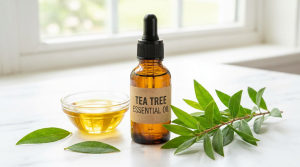
Compare that with an ingredient like tea tree oil, where trials with real numbers exist, or castor oil, where at least the chemistry of the oil itself is well documented. Chebe sits in a different category: a traditional practice with a long history of use and zero published safety or efficacy data. History of use is worth something. It isn’t the same thing as evidence, and we won’t pretend it is.
If someone sells you chebe as proven to grow hair, that claim has no study behind it. We don’t promise hair growth from any ingredient, because no honest seller can.
Using it safely, if you choose to
Cosmetic use on the lengths appears to be the traditional pattern, and the mixture isn’t meant for internal use or for the scalp. Practical rules if you try it:
- Patch test first. Mix a little with your carrier oil and apply to the inner arm for 24 hours. Irritation from plant powders shows up fast.
- Keep it off the scalp. Traditional use coats lengths and ends only. A gritty powder worked into the scalp is hard to wash out and a known route to irritation.
- Buy jars that list every ingredient. A label that says “100 percent chebe” and nothing else is either not the traditional mixture or not telling you the blend.
- Expect colour and texture changes, not miracles. The powder is dark and some mixtures stain light hair or leave residue until fully washed.
- Stop if you see flaking, itching or redness, and see a dermatologist for any persistent scalp problem. A hair powder isn’t worth a scalp condition.
Who it might genuinely suit
If your goal is reducing mechanical breakage on the last few inches of dry, porous, textured ends, a heavy sealing film can plausibly help, and chebe mixtures are one way to build that film. Shea butter, tallow balms or a simple castor oil seal do the same job with ingredient lists you can read. If your goal is faster growth, nothing in a jar does that, and no published work suggests chebe is the exception.
For how dilution thinking applies to any strong botanical in hair care, see our guide to tea tree oil for hair and scalp. For another ancestral oil with a better documented profile, see our piece on black seed oil for hair and scalp.
We work from labels, manufacturer pages and published research. We don’t run hands-on tests, and we don’t promise results. Chebe is an interesting tradition sold with borrowed promises. Buy it for what it plausibly does, not for what the advertisement says.