Tea tree oil helps dandruff at about 5 percent in a rinse-off shampoo, and it irritates when you put it on your scalp neat. The oil’s active compound is terpinen-4-ol, and the whole job of a home recipe is diluting it enough to use it safely. This page gives the one trial, a dilution table and the rules for mixing it into a carrier oil.
What the dandruff study found
Satchell and colleagues gave 126 people aged 14 and older either a 5 percent tea tree oil shampoo or a placebo shampoo, used daily for four weeks. The tea tree group improved 41 percent on a dandruff severity score, against 11 percent for placebo.
Itchiness and greasiness scores also improved, and the authors reported no adverse effects. The abstract is on PubMed.
Know the limits. The trial was single-blind, ran four weeks, and tested a shampoo that you rinse off. It did not test neat oil, leave-in oil or hair growth.
Video: DiscoCurls
Why terpinen-4-ol and dilution decide everything
ISO 4730 sets a minimum of 30 percent terpinen-4-ol for tea tree oil. That compound drives the antimicrobial activity, and it is also why the oil is potent on skin.
Fresh tea tree oil is a weak to moderate skin sensitizer, but oxidation raises its allergenic potency. Old, air-exposed oil is the riskier bottle, so keep it dark, capped and recent.
Tea tree oil dilution table for scalp use
| Dilution | Per 30 ml carrier oil | Reference point |
|---|---|---|
| 1 percent | 0.3 ml, about 6 drops | Top of Tisserand’s 0.2 to 1 percent range for sensitive or impaired skin |
| 2 percent | 0.6 ml, about 12 drops | Inside Tisserand’s 1 to 3 percent range for body oils and lotions |
| 3 percent | 0.9 ml, about 18 drops | Top of that 1 to 3 percent range |
| 5 percent | 1.5 ml, about 30 drops | Strength used in the Satchell shampoo trial, rinsed off |
Sources: Tisserand Institute dilution guide and Satchell et al., 2002. Drop counts assume 20 drops per ml, which varies by bottle.
The same Tisserand guide cites a report where tea tree oil was not drying at 1 percent but slightly drying at 5 percent. For a leave-in scalp oil, start at 1 to 2 percent.
How to use tea tree oil in your hair
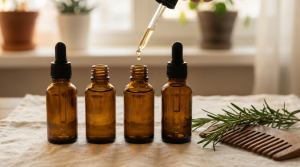
Mix it into a carrier such as jojoba or coconut oil. Patch test on your inner forearm and wait a day before it touches your scalp.
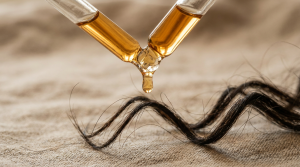
Massage it into the scalp, leave it for 30 minutes, then shampoo. Keep it out of your eyes and away from broken skin.
If you already use a clarifying shampoo, see how it compares in our article on oil-control shampoos versus oiling. For another botanical with scalp claims, read about neem oil for scalp health.
Tea tree oil does not treat every itch. If you have thick scale, red patches or hair loss, check our signs of an unhealthy scalp and see a dermatologist.
Questions readers ask
Can you put tea tree oil directly on your scalp?
No. Tea tree oil is potent and can irritate or sensitize skin when used neat. Dilute it in a carrier oil, starting at 1 to 2 percent for a leave-in, and patch test first.
How much tea tree oil do you mix with carrier oil for hair?
At 1 percent, add about 6 drops to 30 ml of carrier oil; at 2 percent, about 12 drops. Tisserand's guide gives 0.2 to 1 percent for sensitive skin and 1 to 3 percent for body oils.
Does tea tree oil help dandruff?
A 2002 trial of 126 people found a 5 percent tea tree oil shampoo improved a dandruff severity score by 41 percent, against 11 percent for placebo, after four weeks of daily use.